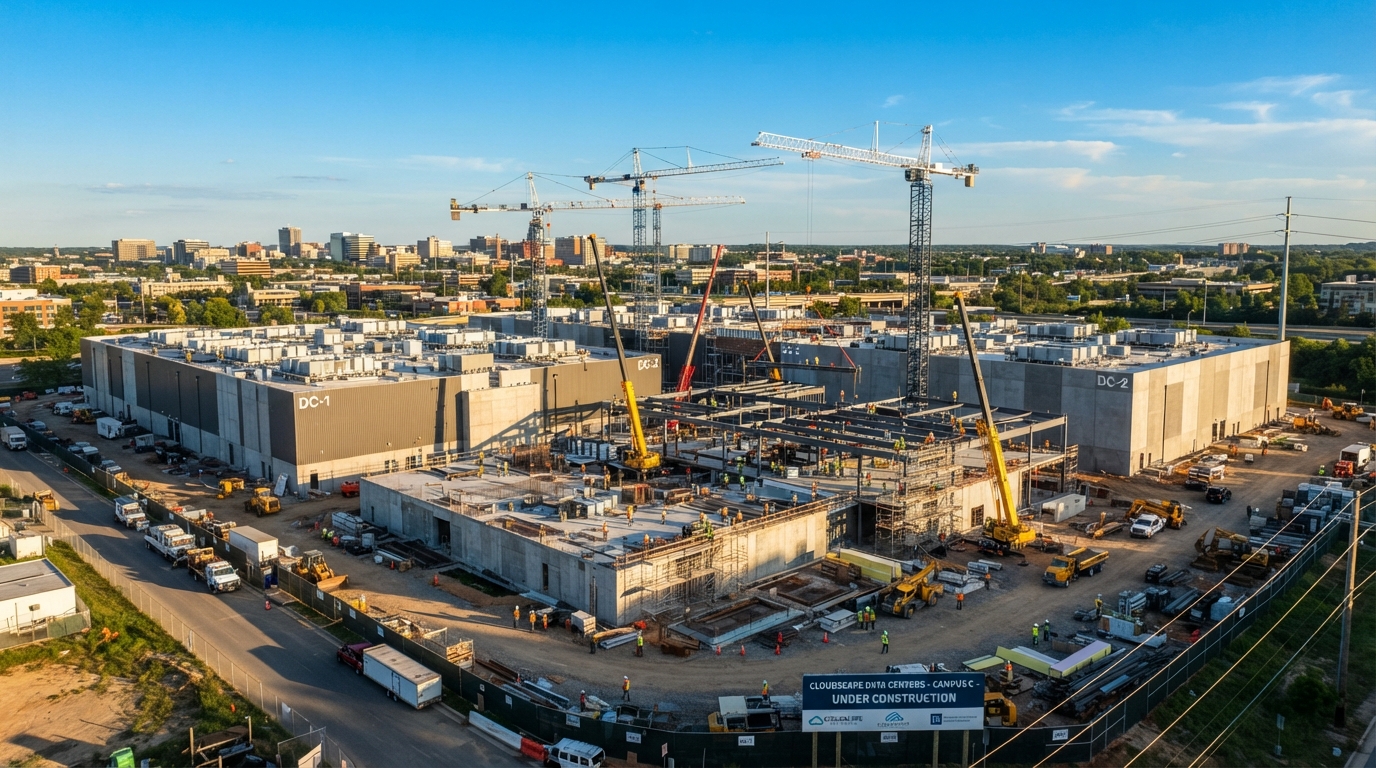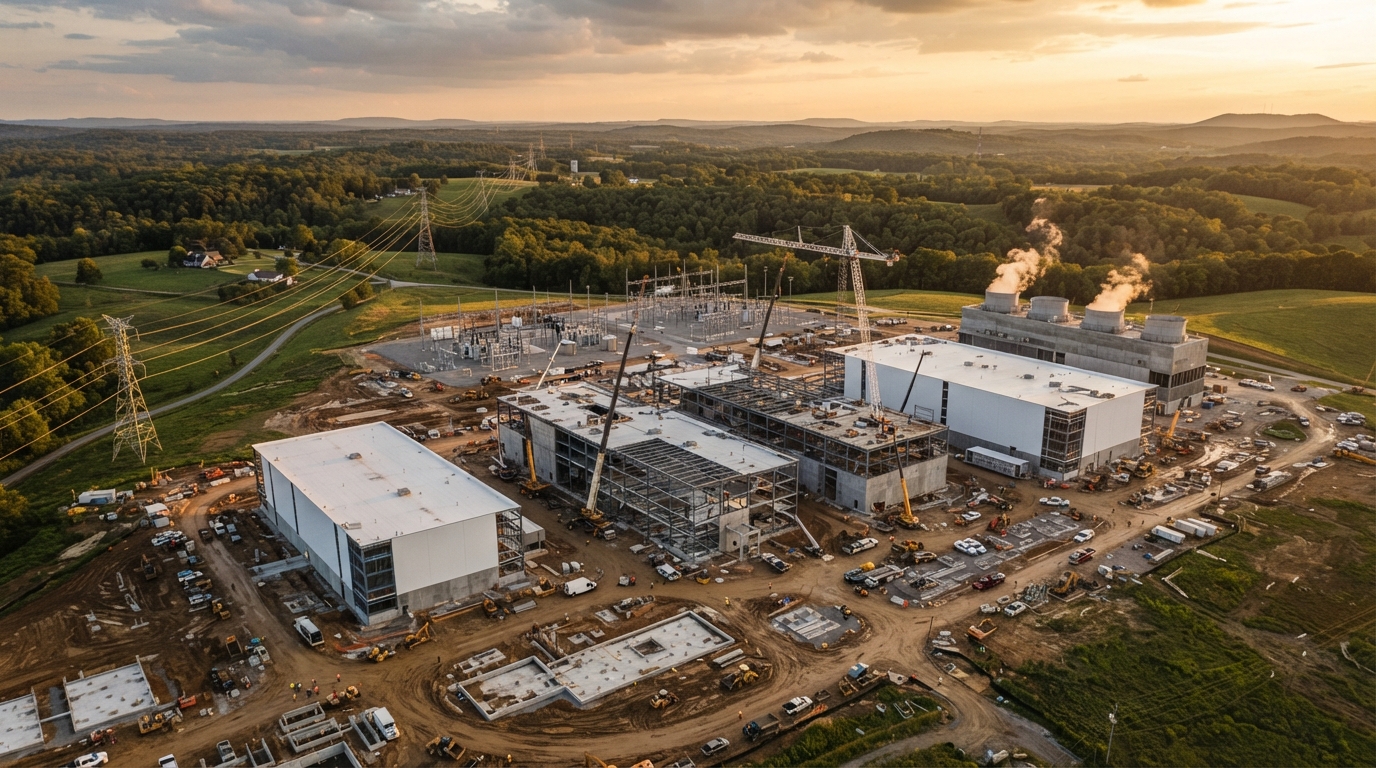
The U.S. Department of Energy has unveiled plans for a more than $100 billion private investment to transform part of the former Paducah Gaseous Diffusion Plant in McCracken County, Kentucky, into one of the nation's largest artificial intelligence data center campuses. The project, dubbed the Paducah American Energy Hub, represents one of the largest economic development investments in Kentucky history.
The public-private partnership includes data center developer Brookfield Asset Management, energy company NextEra Energy Resources, and local and regional electric utilities including Big Rivers Electric Power Corporation, Jackson Purchase Energy Cooperative, and Paducah Power System. The data center campus will have an electric capacity of 1.8 gigawatts, making it among the largest power-intensive hyperscale data centers proposed in the United States.
Project Details
The data center portion of the hub will occupy approximately 600 acres leased by NextEra from the Department of Energy for multiple decades. The campus is designed for artificial intelligence and high-performance computing (HPC) workloads. At or near the campus, NextEra Energy plans to develop two gigawatts of new grid-connected natural gas-fired generation, upgrade existing transmission infrastructure, and deploy up to 2.6 gigawatts of battery energy storage to support the facility.
The project is expected to create approximately 8,000 construction jobs and 600 permanent jobs. A tenant for the data center has not yet been announced. The facility is not scheduled to be fully operational until 2032, though portions could be operating as early as 2028.
A Former Federal Site Reimagined
The Paducah Gaseous Diffusion Plant was a uranium enrichment facility that operated from 1952 until 2013. The site has been the focus of extensive environmental remediation efforts. The data center project is among a flurry of activity at the former plant over the past 12 months, spurred in part by the Trump administration's push to promote data center siting on federal land and advance nuclear energy development.
The announcement positions Western Kentucky at the center of the nation's race to build the computing infrastructure needed for AI, while highlighting the growing role of former industrial and federal sites in meeting soaring demand for data center development.
Community Response
Paducah Mayor George Bray described the project as "affirmation that Paducah is really right at the cutting edge of the next generation of technology and energy." He pledged transparency with the public moving forward, acknowledging that there will be skepticism, as seen with other data center proposals in Kentucky.
Kentucky Attorney General Russell Coleman called the investment "historic" and said it would "create jobs, strengthen our energy security, and deliver lasting economic growth for Paducah and the Commonwealth for decades to come." However, Kentucky Governor Andy Beshear's office indicated he was not briefed on the project before the public announcement.
Some community members have called for an independent environmental impact assessment of the data center and associated energy projects, noting concerns about the pace of development at the former nuclear site.
What This Means
The Paducah project illustrates several defining trends in America's digital infrastructure buildout: the scale of individual projects is growing dramatically, former industrial and federal sites are becoming prime locations for development, and dedicated energy infrastructure is increasingly being built alongside data centers rather than relying solely on existing grid capacity.
The project also demonstrates how data center development, power generation, and transmission are now deeply interconnected — and why communities, utilities, and policymakers must coordinate across all of these dimensions.