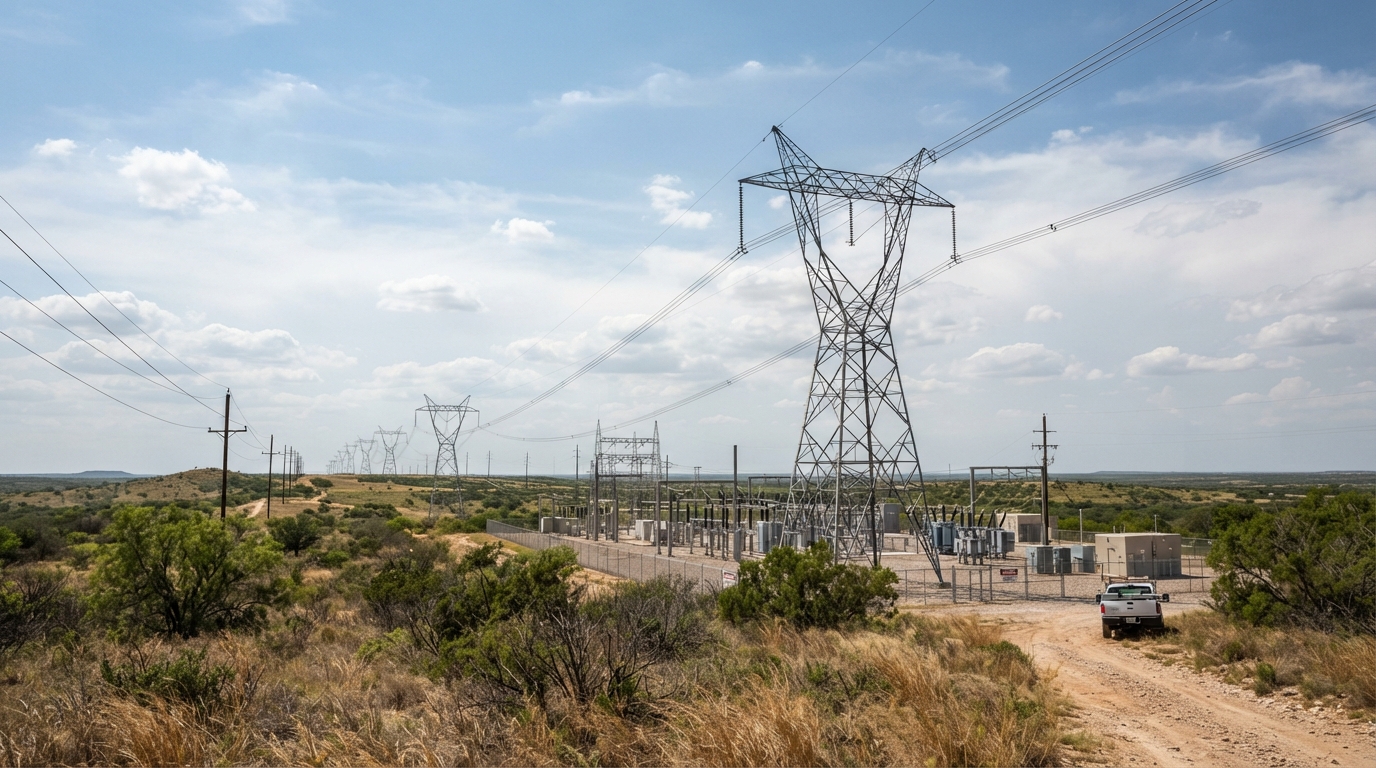
The Public Utility Commission of Texas (PUCT) has approved a one-time, systemwide process to evaluate new large loads and load expansions of 75 megawatts or more on the ERCOT grid. The process creates what amounts to a credibility test for gigawatt-scale data center demand, requiring large-load customers to demonstrate that their projected power needs are real and reliable.
The new process comes as ERCOT, the electric grid operator for most of Texas, faces unprecedented growth in data center load, particularly in the Dallas-Fort Worth area. The interconnection queue has reached record length, driven in significant part by data center demand and associated generation projects seeking to connect to the grid.
The Interconnection Challenge
Interconnection queues have become a bottleneck for new generation projects across the country. The process of studying, approving, and connecting new generation to the grid can take several years, and queues have grown as data center demand has accelerated the volume of proposed generation projects.
In Texas, ERCOT has proposed reforms to streamline the interconnection process, including grouping projects for study and requiring financial commitments earlier in the process. The new large-load evaluation process is designed to help the grid operator distinguish between credible demand and speculative projects that may never materialize.
A National Issue
The Texas approach reflects a challenge facing grid operators nationwide: how to plan for rapidly growing data center demand when many announced projects may not proceed as projected. Data center projects are announced years in advance of actual power demand, and projects can be delayed, scaled back, or cancelled.
Utilities and grid operators must make generation and transmission investment decisions based on demand forecasts, creating tension between ensuring adequate supply and protecting ratepayers from stranded costs. ADIC supports efforts to improve demand forecasting accuracy and ensure that infrastructure investments are based on credible, committed load.